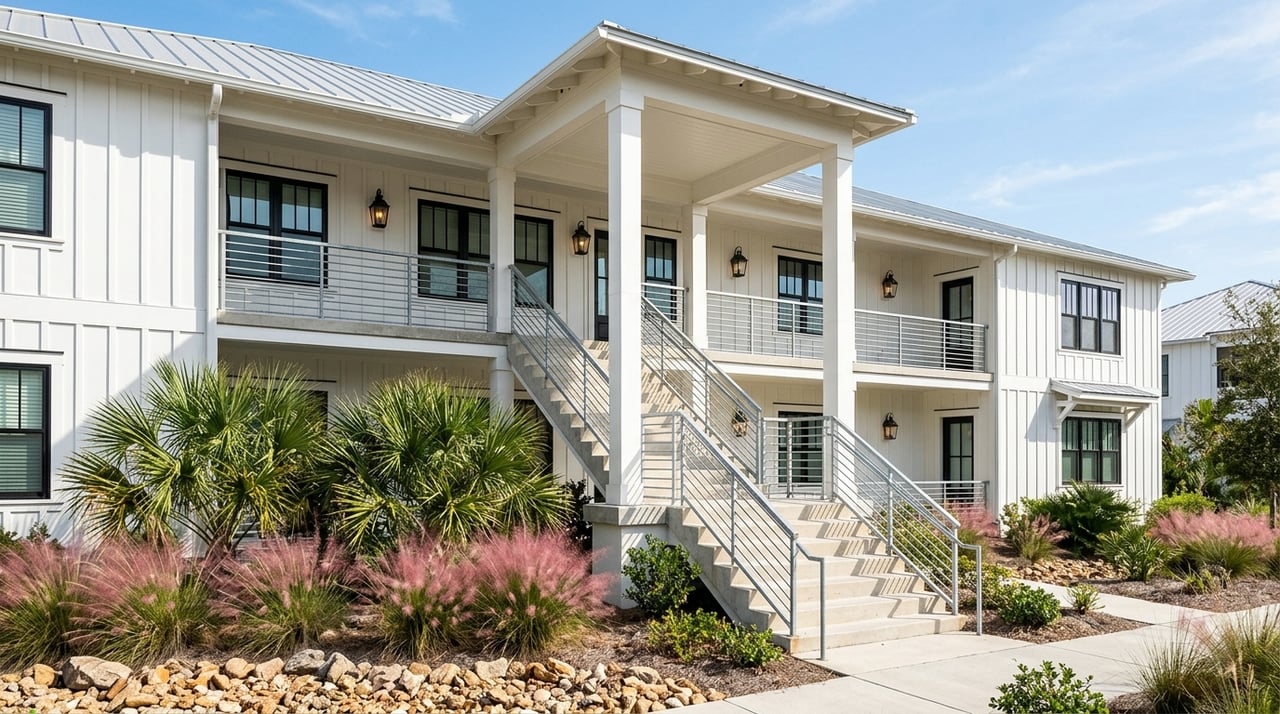
Surfside Beach Condo Guide for Townhome Buyers
May 14, 2026
May 14, 2026
Thinking about buying a condo or townhome in Surfside Beach? It can be a smart way to enjoy the coast with less exterior upkeep, but this market comes with details you do not want to gloss over. If you are looking for a primary home, second home, or rental-friendly property, understanding how Surfside Beach handles ownership, zoning, fees, and flood-related issues can help you make a better decision. Let’s dive in.
Surfside Beach offers more variety than many buyers expect. According to the town’s 2023 comprehensive plan, 52% of housing units are single-family detached, while 43% are townhomes or other attached units. That mix creates options for buyers who want a low-maintenance property without giving up a residential setting.
The town also balances year-round living with vacation use. Its plan identifies 1,844 seasonal or short-term rental properties, which make up 72% of vacant properties. That matters because one part of Surfside Beach may feel very different from another depending on whether nearby homes are used mostly as full-time residences, second homes, or short-term rentals.
Before you focus on finishes or views, start with the legal setup. In Surfside Beach, the building style alone does not tell you how the property is owned or what rules apply. The town’s zoning code treats single-family attached homes, duplexes, multi-family dwellings, transient short-term rentals, long-term rentals, and resort accommodations as separate uses.
That means two properties that look similar from the street can operate very differently. One may be part of a condo regime with shared common elements and detailed bylaws, while another may be in an HOA-governed townhome community with a different set of recorded documents and rules.
Under South Carolina’s Horizontal Property Act, a condo owner has exclusive ownership of the unit and a common right in the common elements. The master deed must spell out the land, the units, common elements, percentage interests, and the rights and obligations of owners. It may also include leasing restrictions, including lease term limits.
For you as a buyer, that means the condo documents are a major part of the property. Monthly dues, insurance responsibilities, use restrictions, and leasing rules are not side issues. They are part of the value and risk of the purchase.
Some Surfside Beach townhomes are part of an HOA or planned community rather than a condo regime. In those communities, the enforceable governing documents may include the declaration, master deed, bylaws, and amendments, and South Carolina law requires those documents to be recorded to be enforceable.
This is important because townhome buyers sometimes assume ownership is simpler than condo ownership. In reality, you still need to review the documents closely to understand maintenance obligations, common-area rules, budgets, and any rental restrictions.
Surfside Beach is not one-size-fits-all. The town’s planning documents note that attached and multi-family residential uses are concentrated near the beachfront along Ocean Boulevard. The beachfront and nearby blocks are intended to remain mostly residential in character, with commercial and recreational clusters near the pier.
For buyers, that makes micro-location a big deal. A unit closer to the beach may offer easier access, stronger vacation appeal, and more activity nearby, while a property farther from the ocean may feel quieter and more residential. Neither is automatically better. It depends on how you plan to use the home.
In Surfside Beach, condo and townhome value often comes from community features more than lot size. Recent listings commonly highlight amenities such as:
Those amenities can improve daily convenience and rental appeal, but they also affect dues and maintenance costs. A building with elevators, shared recreation areas, and private beach access may deliver a strong lifestyle benefit, yet those features usually come with more ongoing expense.
Public infrastructure plays a bigger role in Surfside Beach than many buyers realize. The town reports 36 public beach access points, 15 pay-to-park lots, restroom access at select beach entrances, and a handicapped-accessible ramp at 13th Avenue South.
If you are comparing properties, think beyond the listing photos. A unit may not sit directly on the ocean and still offer very practical beach use because of nearby public access. On the other hand, parking patterns and seasonal traffic near the oceanfront can affect how easy the property feels to use for you, guests, or renters.
The documents matter just as much as the floor plan. Whether you are buying a condo or a townhome, the safest move is to review the governing paperwork early so you know what you are actually buying.
Request these items before you move forward:
These documents can help you answer the most important questions. What does the monthly fee cover? Are there limits on rentals? Could future repairs lead to extra owner costs? Are there parking limits or use restrictions that would affect how you plan to use the property?
Monthly dues can look simple on the surface, but the details matter. Under South Carolina law, condo co-owners contribute proportionally toward administration, maintenance, and repair costs. The council of co-owners must also insure the property against risks.
There is another layer to understand. If damage or reconstruction costs exceed insurance proceeds and reserves, the extra cost can become a common expense. In practical terms, that means owners can face added costs beyond routine monthly dues.
That is why reserve levels, insurance coverage, and past assessment history deserve close attention. A lower monthly fee is not always a better deal if it reflects underfunded reserves or deferred maintenance.
If you are hoping to use the property as a second home or investment, rental rules should be one of your first checkpoints. Surfside Beach zoning treats transient short-term rentals and long-term rentals as separate uses. Even when zoning allows a certain rental use, the master deed or HOA documents can still limit lease length or other rental terms.
This is where buyers can get tripped up. A property may be in a town that supports vacation activity, but the community documents may still narrow what owners can do. Always confirm both the local use category and the association rules before relying on rental income plans.
Property tax treatment in Horry County can also affect your budget. The county’s Legal Residence classification uses a 4% assessment ratio for owner-occupied primary residences. Non-legal residence property is taxed at the higher 6% ratio, and the county states that the 4% rate does not apply to second or vacation homes.
If you are buying a primary residence, this may create meaningful savings compared with a second-home purchase. If you are buying a vacation property, you should budget using the non-legal residence framework unless you confirm otherwise through the county.
Flood risk is a core part of buying near the coast. Surfside Beach says properties are in or near mapped flood hazard areas, and the Planning, Building & Zoning Department handles flood maps, elevation certificates, flood insurance rate maps, and special flood hazard area requirements.
The town also states that all development in the regulatory floodplain requires an elevation certificate before, during, and after construction. In addition, Surfside Beach is a CRS Class 7 community, which receives a 15% local flood-insurance discount.
For buyers, the practical step is simple. Ask whether the property is in a flood zone, what flood insurance may be required, and what records are available for the building or unit. This is especially important if you are buying for part-time use and want predictable carrying costs.
When you tour condos and townhomes in Surfside Beach, keep a short list of questions with you. In this market, the best purchase decisions usually come from clear answers to a few specific issues.
Ask these questions:
These questions can help you compare properties on more than looks alone. They also make it easier to spot differences between a good lifestyle fit and a good financial fit.
Surfside Beach can be a great place to buy a condo or townhome, but success here comes from understanding the details behind the listing. Ownership structure, rental rules, flood considerations, fees, and location within town can all shape your long-term experience.
If you want a home that fits your goals, the process should be disciplined from the start. The right guidance can help you narrow the options, ask sharper questions, and move forward with fewer surprises. When you are ready to explore Surfside Beach condos and townhomes, connect with Dan Benish for local, hands-on guidance tailored to your goals.
Stay up to date on the latest real estate trends.


Contact Dan today to learn more about his unique approach to real estate and how he can help you get the results you deserve.

100 Greenway Blvd Murrells Inlet, SC 29576