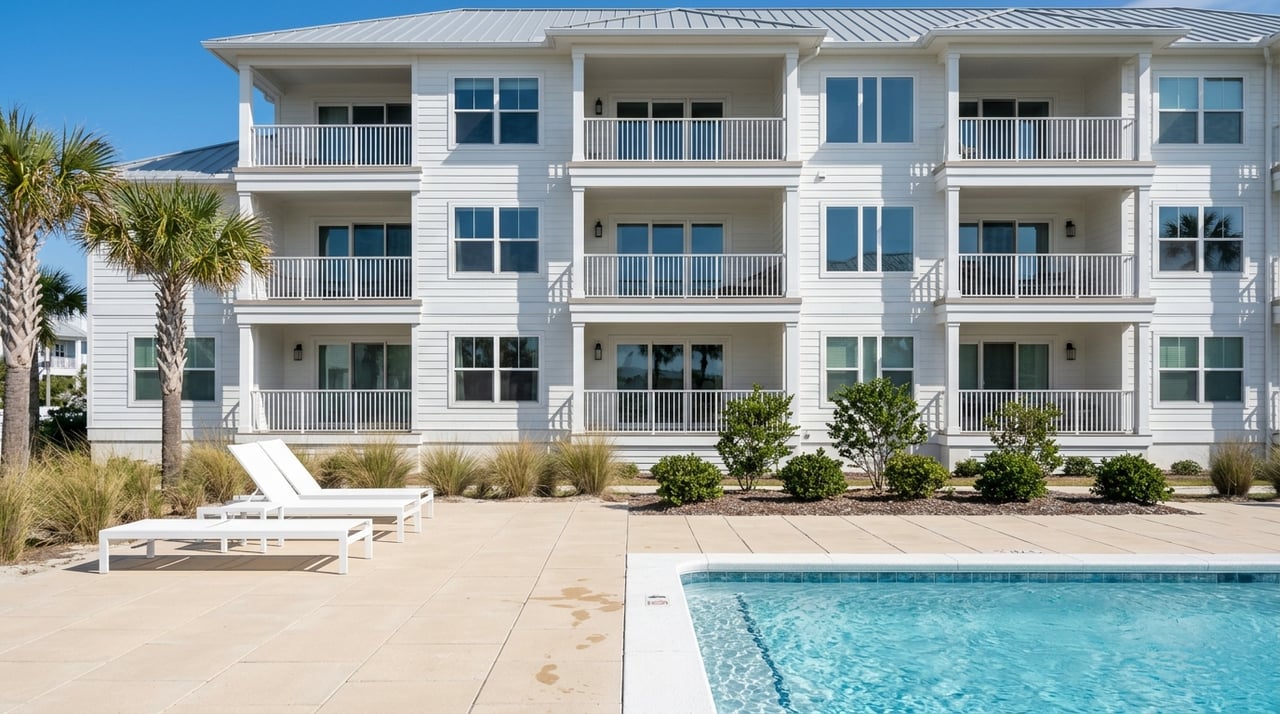
Garden City Oceanfront And Second Row Condo Guide
April 16, 2026
April 16, 2026
If you are comparing oceanfront and second row condos in Garden City, the choice is not just about how close you are to the sand. It is about views, HOA costs, building style, rental rules, storm risk, and how you plan to use the property. Whether you want a low-maintenance second home, a vacation rental, or a place to enjoy the coast more often, understanding those trade-offs can help you buy with more confidence. Let’s dive in.
In Garden City, oceanfront condos sit directly on the beach, while second row condos are typically across the street from the ocean. That sounds simple, but the day-to-day difference can feel smaller than many buyers expect because Horry County says free year-round parking is available at all oceanfront beach accesses in Garden City.
That easy public access is one reason second row condos stay popular. You can still be very close to the beach while often buying at a lower price point than a direct oceanfront unit.
It also helps to know that many listings marketed as Garden City use Murrells Inlet mailing addresses and ZIP codes. When you search available condos, looking under both Garden City and Murrells Inlet can give you a fuller picture of inventory, as shown in current Garden City condo search results.
Garden City has a wide mix of condo styles, which means your experience can vary a lot from one building to the next. According to local market examples, the area includes high-rise towers, mid-rise buildings, low-rise walk-ups, and even oceanfront townhouse-style properties.
You will see names like One Ocean Place and SurfMaster By The Sea for taller oceanfront towers, Sea Master for a mid-rise option, and Ocean Townes for a townhouse-style oceanfront setup. That variety matters because building style affects parking, elevators, views, and the type of maintenance and services included in the HOA.
Oceanfront buildings often offer the strongest view potential and the most direct beach access. They also tend to show the biggest range in amenities, from basic older buildings to complexes with elevators, pools, sundecks, and on-site management.
A recent Atalaya Towers sale example highlights what a more service-heavy building can include: indoor and outdoor pools, a hot tub, an oceanfront sundeck, elevators, multiple parking spaces, and HOA coverage for building insurance, water and sewer, trash, cable and internet, pest control, landscaping, and management.
But not every oceanfront property is loaded with amenities. For example, Sea Watch VIII is oceanfront but has no pool and no elevator, while Sea Cloisters is noted in the research as oceanfront with a pool and landscaped courtyard but no elevator. That is why building-by-building review matters just as much as location.
Second row condos are usually more value-driven, but they are not all the same. Some have pools and partial ocean views, while others are more basic walk-up buildings with fewer shared amenities.
For example, Garden Sands is described as a second row complex across from the beach with some ocean views, a pool, limited parking, and no elevator. The Drifter complex is also second row, across the street from the beach, with a pool and no elevator.
This side of the market often includes older low-rise inventory. A current Garden Sands listing describes a low-rise building from 1985, which is a useful reminder that second row does not always mean newer or easier, only less directly on the water.
For many buyers, the biggest question is whether oceanfront is worth the premium. In Garden City, the answer usually depends on how much you value direct views, balcony experience, and immediate beach access.
The price gap can be meaningful. A current comparison on Homes.com shows a second row Sandy Shores III 3-bedroom condo listed at $385,000, while an oceanfront One Ocean Place 2-bedroom condo is listed at $645,000.
Another current comparison on Realtor.com shows a Garden Sands second row 2-bedroom condo listed at $219,900 versus a Sea Master oceanfront 2-bedroom condo listed at $365,000. That does not mean every oceanfront unit is automatically the better buy. It means the market generally places a premium on direct waterfront placement.
Beyond location, several details influence condo value in Garden City:
This is especially important because some complexes are oceanfront, but not every unit has the same view quality. Research from Garden City complex pages notes that a complex can be oceanfront while certain units are set back or angled, making unit position and stack number critical.
HOA dues in Garden City vary widely, and you should look at them as a package, not just a number. Lower dues may mean fewer shared services, while higher dues often reflect more insurance, maintenance, utilities, and amenity support.
The current examples in the research report show that spread clearly:
These figures come from recent listing examples and the Atalaya Towers sale summary. In many buildings, dues may cover items like exterior insurance, water and sewer, trash, cable or internet, elevator maintenance, pool upkeep, landscaping, and management, but every association is different.
Before you buy, make sure you know:
The South Carolina Department of Consumer Affairs HOA guide recommends reviewing bylaws, dues, reserves, insurance declarations, meeting minutes, and any current violations before closing.
Coastal condos come with real environmental considerations, and Garden City is no exception. Horry County’s beach management plan says the county beachfront is mapped in FEMA VE flood zone, and the county also notes coastal Zone A evacuation areas include stretches east of U.S. Business 17 with fluctuations in Garden City and Surfside Beach.
That does not mean you should avoid the area. It does mean you should go in with clear eyes and review flood exposure, elevation, association insurance, and storm preparation carefully.
The South Carolina Department of Insurance states that standard homeowners and renters policies typically do not cover flood or storm-surge damage. For that reason, if you are buying an oceanfront or flood-zone condo, it is smart to ask for the building’s flood-related documentation and insurance details early in the process.
Horry County also notes that shoreline work is ongoing through the Garden City Resiliency Project, with beach-renourishment efforts aimed at reducing erosion and storm-surge damage to the coastline and infrastructure.
How you plan to use the condo can change your costs in a big way. In Horry County, a qualified owner-occupied primary residence is assessed differently from a second home or vacation property.
According to Horry County tax FAQs, real property is assessed at 4% for a qualified owner-occupied primary residence and 6% for all other residential property. The county also makes clear that the legal-residence application applies only to primary residences, not second or vacation homes.
If you are buying for rental income, there is another layer to review. Horry County’s Hospitality Fee information explains that the fee applies to short-term transient accommodation rentals, and the county also provides a business-license verification tool for businesses operating in unincorporated Horry County.
Just as important, rental rules can differ by building. The research report notes that some Garden City listings explicitly say short-term rentals are allowed, long-term rentals are allowed, or both. That is why listing language should always be matched against the HOA documents before you move forward.
A condo’s rules can affect your ownership experience as much as the floor plan. In Garden City, building-specific rules may cover parking-pass limits, trailer restrictions, golf cart restrictions, motorcycle permissions, and pet policies.
Examples on Garden City Realty complex pages show just how much those details can vary from property to property. If you plan to use the condo seasonally, bring certain vehicles, or want flexibility for guests or renters, those rules deserve early attention.
Whether you are focused on personal use, a second home, or rental potential, these questions can help you compare Garden City condos more clearly:
If you want the strongest views, the most direct beach experience, and often the best rental appeal, oceanfront condos usually sit in Garden City’s premium segment. If you want easier entry pricing, close beach access, and potentially a better value play, second row condos often deliver a strong alternative.
The key is not to treat this as a simple location debate. In Garden City, the smartest comparison is usually unit view, building quality, HOA scope, rental rules, and flood-related costs all together.
If you want help sorting through Garden City oceanfront and second row condo options, working with a local coastal specialist can save you time and help you compare the details that matter most. Connect with Dan Benish for clear, local guidance tailored to your goals.
Stay up to date on the latest real estate trends.
Contact Dan today to learn more about his unique approach to real estate and how he can help you get the results you deserve.
100 Greenway Blvd Murrells Inlet, SC 29576